
Your Spine Already Has a Podcast: You Just Never Subscribed
An audio chapter for those who learn best while pretending to be productive

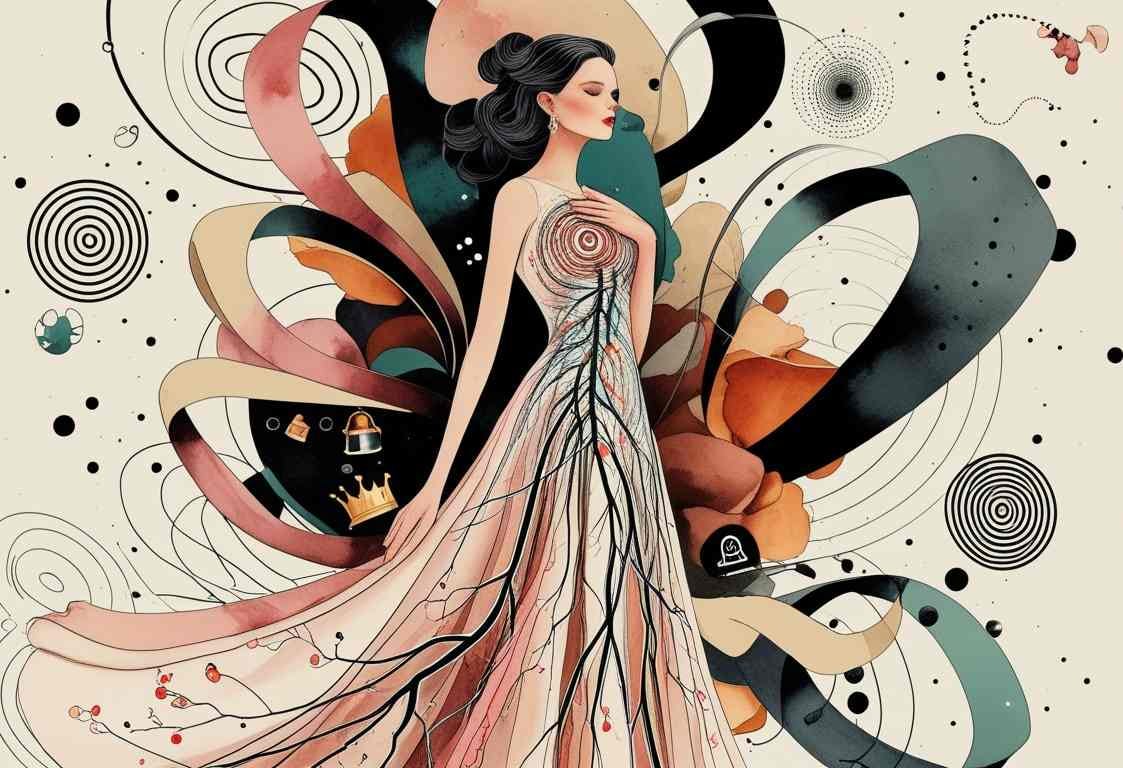
These past days we’ve been deep in the comments and messages about the nervous system and honestly? You showed up. The questions weren’t “how do I manifest my ex back” or “what crystal fixes everything.” They were real. Body-level. The kind that made me want to send you all a voice note at 2am like some kind of spiritual booty call except with bibliography and footnotes.
Blood recognizes when a conversation matters. Bones settle differently when truth gets exchanged. Something landed between us this week and the tissue remembers.
So I’m giving you an audio chapter. The backbone chapter. The one about the nervous system and the Field that explains why we’re even talking about flesh like it has intelligence instead of just “the meat suit carrying your overthinking to work.” (Yes, you can listen while washing dishes, walking, driving, existing. Your life will not pause so you can sit in lotus position absorbing wisdom like an enlightenment sponge with suspiciously good posture and an apartment that’s way too clean for someone who claims to be “going through it.” Plug in. Live. Let it land between the errands.)
This is the skeleton everything hangs on. Field… Nervous System… Perception… Life. The whole book spirals around this spine like breath around the body that holds it.
Here’s the thing though. Your podcast queue is already stuffed. Huberman explaining dopamine like he personally invented it. Three hundred hours of true crime you listen to while folding laundry like a completely normal person who definitely doesn’t have a favourite serial killer. That one productivity bro who discovered time-blocking and now speaks about it with the fervor of someone who found Jesus inside a Google Calendar. The girlies discussing attachment styles like they’re collecting Pokémon. And that one episode about “morning routines” you saved eight months ago and still haven’t listened to because your morning routine is “survive.”
Meanwhile, the most important broadcast has been running through your own vertebrae and you keep skipping it because there’s no ad read for Athletic Greens.
The brain isn’t author. The brain is radio. Break the radio and music doesn’t vanish. Music is everywhere, infinite, waiting. The catching device just stopped working. That’s all.
Your laptop crashing doesn’t mean the internet disappeared. Your laptop was never the internet. (Plot twist that should be obvious but somehow requires seventeen repetitions before the nervous system finally goes “oh” and your therapist goes “I’ve been saying this for months.”)
You’re reading this thinking “yeah but I already know the body is important, tell me something new.” And you’re right, you do know. Conceptually. Intellectually. In that way where you can explain it to others at dinner parties but your jaw is still clenched and your shoulders are at your ears and your left hip holds a grudge from 2016 that you’ve named “just tightness.”
The Field moves through neurons like a lover who memorized the room in the dark. Skin is where infinity finally gets a postcode. Cells have been translating signals the mind keeps marking as spam.
Why audio? Because reading transforms the brain differently. Reading builds neural pathways. Eyes moving across silence, that alchemy only text creates. Reading is CrossFit for the prefrontal cortex except you don’t have to announce it at brunch. Although people who read a lot ALSO announce it constantly. So maybe it’s exactly like CrossFit. The Venn diagram is a circle. Everyone in it is insufferable. I say this with love and self-awareness.
But sound slips past guards. It reaches tissues text can’t always enter. Ears are gates that bypass the committee your ego assembled specifically to reject anything that might actually change you.
The nervous system is the interface between human and infinite. One and a half kilos of neurons. Thirty meters of nerve fibers. All of it deciding: how much signal gets through, how much love can land without triggering emergency protocols, how much money can stay before childhood programming screams DANGER and self-sabotages everything by Tuesday afternoon while you’re “just being realistic about finances.”
Your nervous system has been working as an unpaid intern for your family trauma since approximately birth. No benefits. No PTO. No HR department to complain to. Just decades of “but this is how we’ve always done it” while running survival software from 1987 on hardware that desperately needs an upgrade.
(A seven-year-old signed contracts a forty-year-old is still honoring. No legal counsel present. No fine print read. Interest rates in the somatic economy are BRUTAL and compounding daily. Your therapist would like a word but she’s booked until March and your system classified “asking for help” as threat back in second grade anyway.)
This is the spine of the spine. The chapter that reorganizes everything if it lands where it needs to land. The part where the body finally gets to testify.
For those who haven’t grabbed the book yet. For those still circling, still “planning to,” still saving it for “when things calm down” which is code for never because things don’t calm down, YOU calm down, and that’s exactly what we’re talking about...
Here’s the taste. Here’s the framework. Here’s why you love like you love, earn like you earn, collapse like you collapse, and rise like you rise.
The body knew the whole time. Cells hold what the mind keeps Googling at 3am. Blood carries intelligence the brain keeps outsourcing to podcasts hosted by men who discovered breathing and made it a personality.
Press play. Walk somewhere. Wash something. Drive.
Let it land where it needs to. 🔥
This is a chapter from Mechanics of Mystic: A Nervous System’s Guide to Being God 💎
👉 Why I wrote this book 👉 Get it on Amazon

For the nerds who want receipts: Your cells weren’t being woo. They were being peer-reviewed:
Polyvagal & Vagal Regulation (Core Series Foundation)
Polyvagal Theory Observation (Porges, 2025): Vagal emotional pathways. https://pmc.ncbi.nlm.nih.gov/articles/PMC12479538/
Polyvagal Perspective (Porges, 2006): Autonomic entrainment. https://pmc.ncbi.nlm.nih.gov/articles/PMC1868418/
Polyvagal Therapy (Porges, 2011): Interpersonal synchronization. https://pmc.ncbi.nlm.nih.gov/articles/PMC3490536/
Vagal Flexibility Predicts Sensitivity (Muhtadie, 2014): RSA modulation for adaptation. https://pmc.ncbi.nlm.nih.gov/articles/PMC4478218/
Vagus Stimulation Modeling (2023): Dynamic HR control. https://pmc.ncbi.nlm.nih.gov/articles/PMC9936668/
Fascial Biotensegrity & Plasticity
Fascial Sports Medicine (Zügel, 2018): Biomechanical remodeling. https://pmc.ncbi.nlm.nih.gov/articles/PMC6241620/
Myofascial Release Pain Reduction (2022): Dynamic tissue effects. https://pmc.ncbi.nlm.nih.gov/articles/PMC8791964/
Fascia-NS Bidirectionality (2024): Neural regulation. https://pmc.ncbi.nlm.nih.gov/articles/PMC11346343/
Fascial Innervation Review (2022): Nociceptor pathology. https://pmc.ncbi.nlm.nih.gov/articles/PMC9143136/
Fascia Regulatory System (Frontiers, 2024): Neurotransmitter mediation. https://www.frontiersin.org/journals/neurology/articles/10.3389/fneur.2024.1458385/full
Somatic Trauma, Interoception & Multiplicity
Somatic Experiencing Interoception (Payne, 2015): Discharge protocols. https://pmc.ncbi.nlm.nih.gov/articles/PMC4316402/
SE Effectiveness Meta (Kuhfuß, 2021): Body-oriented resolution. https://pmc.ncbi.nlm.nih.gov/articles/PMC8276649/
IFS Multiplicity Self-Compassion (Böckler, 2017): Parts awareness. https://pmc.ncbi.nlm.nih.gov/articles/PMC7089715/
Interoception Bias SSD (2022): Signal accuracy. https://pmc.ncbi.nlm.nih.gov/articles/PMC9387777/
IFS Neurobiology Trauma (2025): Limbic integration. https://www.calmagaincounseling.com/the-blog/the-neurobiology-of-ifs-how-it-affects-trauma-recovery
Cardiac/HRV Coherence & Breath
Cardiac Coherence Stability (McCraty, 2014): Emotional entrainment. https://pmc.ncbi.nlm.nih.gov/articles/PMC4179616/
HeartMath Dysregulation-Coherence (2025): Vagal synchrony. https://pmc.ncbi.nlm.nih.gov/articles/PMC12722655/
Diaphragmatic Rumination (Hoshikawa, 2020): Vagal tone ↑. https://pubmed.ncbi.nlm.nih.gov/32383546/
Deep/Slow Breathing ANS (Magnon, 2021): Vagal outflow. https://www.nature.com/articles/s41598-021-98736-9
Sudarshan Kriya Vagal (Tripathi, 2025): Exhalation activation. https://pmc.ncbi.nlm.nih.gov/articles/PMC12375072/
Hemispheric, HPA & Threat Systems
Hemispheric Dialectics (Faust, 2014): Rigidity/chaos balance. https://pmc.ncbi.nlm.nih.gov/articles/PMC4095568/
Affect Dysregulation (Schore, 2006): Right-hemisphere. https://pmc.ncbi.nlm.nih.gov/articles/PMC2277284/
Amygdala Hypervigilance (2020): Threat bias. https://pmc.ncbi.nlm.nih.gov/articles/PMC5591857/
HPA Axis Dysregulation (Tsigos, 2014): Cortisol chronicity. https://pmc.ncbi.nlm.nih.gov/articles/PMC4263906/
PFC Amygdala Inhibition (Arnsten, 2011): Stress-induced shutdown. https://pmc.ncbi.nlm.nih.gov/articles/PMC3153795/
Relational/Enteric & Books
Body Keeps Score (van der Kolk): Trauma imprinting. https://www.besselvanderkolk.com/resources/the-body-keeps-the-score
Complex PTSD Fawn (Walker, 2013): Protective typology. https://www.penguinrandomhouse.com/books/221285/complex-ptsd-by-pete-walker/
IFS & Foundational Sites
IFS Institute Model: Parts & Self. https://ifs-institute.com
Somatic IFS Evolution: Body-parts integration. https://www.embodiedself.net/the-evolution-of-somatic-ifs
This came just after looking for an audio version of Mechanics of Mystic on Audibooks.😊
I look foward to listening!🙌
Hey Dea. I listened to your audio last night, as I snuggled in bed. A lovely way to drift off to sleep. The part that jumped out at me was when you talked about a part that regulates when you look at wide expansive views (I don't recall the name of it...can you remind me?). My body has brought me to this place. Where I live now is at the top of a mountain.. so as I look out from my balcony I have this amazing expansive view of mountain ranges and the valley below.
Also I have experienced something rather symbolic and insightful as I explore the mountain paths. Whenever I follow a path that goes down into the valley.. I hit a dead end, where the path is overgrown and I cannot move forward, then i had to retrace my steps back home. Yesterday, I decided to follow a path that took me upwards and I met no restrictions. I was able to do a full circular walk, back home, with amazing views along the way.
There is a powerful message for me here, in how I move forward in life from here on in.
Thankyou as always Dea. Your audio really helped and I felt incredibly calm and balanced when I woke up this morning💜💜💜