

Your nervous system has been holding its breath for six days waiting for a text message, your amygdala has started a true crime podcast about your love life called “Serial Ghosters,” and somewhere between “they’re definitely ghosting me” and “what if they died in a very localized natural disaster that only affected their thumbs,” you’ve lost the ability to taste food, sleep through the night, or remember why you wanted this person in the first place.
You’ve refreshed your inbox 46 times since breakfast. You’ve constructed elaborate theories about why they haven’t responded that would make QAnon look like reasonable journalism. You’ve checked if maybe your phone is broken, if maybe THEIR phone is broken, if maybe the entire global telecommunications infrastructure collapsed but only for messages addressed to you specifically. You’ve googled “how long until a text is considered ghosting” and the answer was “it depends” which is the WORST possible answer, worse than rejection, worse than death, worse than finding out your ex is engaged to someone who does CrossFit AND has a podcast AND their apartment has exposed brick.
This is limbo. And your body is holding it in places you didn’t know could hold things.
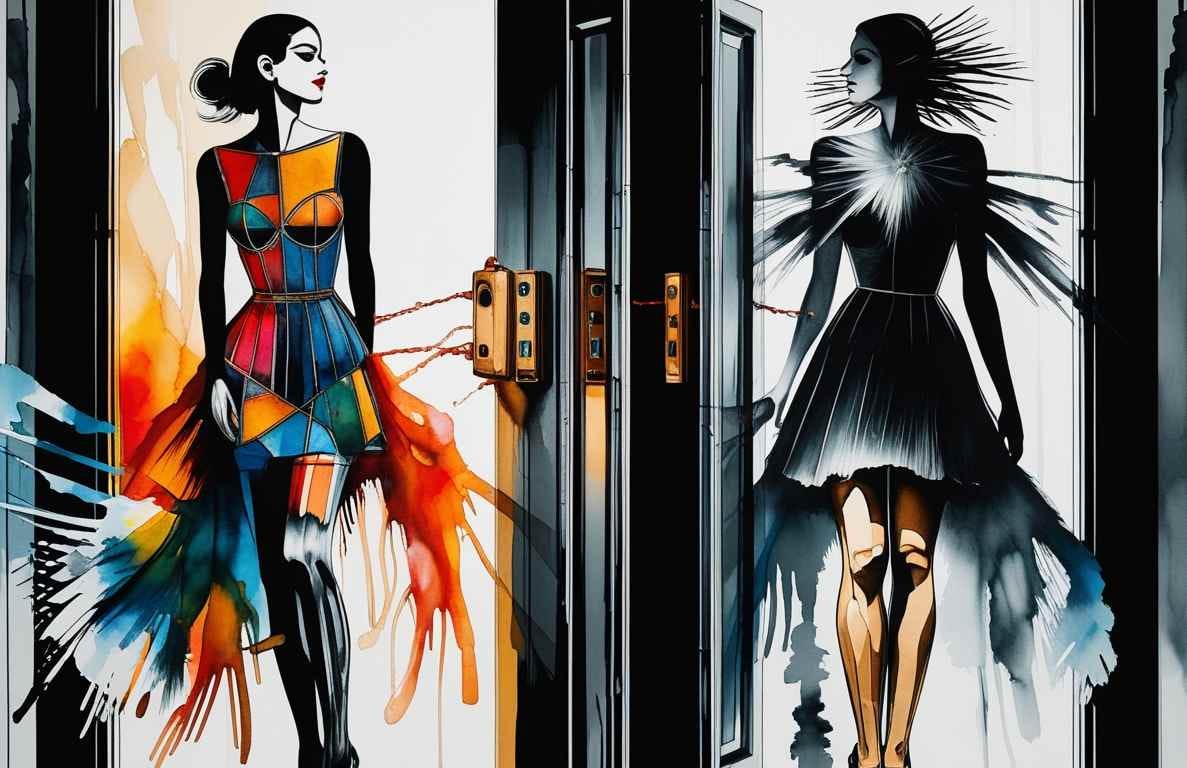
Your bones are clenched like fists. Your blood is suspended mid-sentence, waiting for permission to continue. Every cell kneels at a threshold that refuses to become a door, and your flesh is trying to metabolize uncertainty like it’s a food group nobody taught you how to digest.
Here’s what nobody tells you: a bad answer is neurologically easier than no answer. Your system knows how to grieve. It knows how to celebrate. It knows how to fight or flee or freeze. What it doesn’t know is how to exist in suspended animation while someone else holds the remote control to your future and they’ve apparently gone to get snacks and FORGOTTEN THEY LEFT YOU ON PAUSE. Just out there. Living their life. Possibly thinking about you. Possibly not thinking about you at all. Possibly dead. You don’t know. THAT’S THE WHOLE PROBLEM.
You Know You’re in Limbo When...
Let’s do a quick scan. See if your nervous system starts sweating:
Work and survival: You had the interview. You wore the good blazer, the one that says “I’m competent but also approachable but also don’t fuck with me but also please hire me I’ll do anything.” You laughed at their joke about synergy even though synergy makes you want to commit crimes. They said “we’ll be in touch next week.” It’s been twelve days. Your entire financial future hangs on whether Karen from HR returns from her dental appointment before 5pm on a Friday. You’ve started checking LinkedIn like it’s a slot machine. Every notification sounds like either a rescue helicopter or the four horsemen of unemployment arriving on electric scooters because even the apocalypse has to be budget-conscious now.
Your throat is holding the words you didn’t say. Your jaw is clenching around the smile you held too long. Somewhere in your chest, a small animal is pacing in circles, wearing a path into your sternum, muttering “we should have asked about the benefits package differently.”
Love and connection: Someone said “I need some time to think.” They said it gently, compassionately, with eye contact that could mean literally anything from “I’m falling in love with you” to “I’m about to destroy your life” to “I’m constipated and that’s actually what this face is.” And now you exist in a dimension where they’re simultaneously leaving you, marrying you, and forgetting you exist while ordering sushi with someone who has better eyebrows and a podcast and probably does yoga at sunrise unironically.
The read receipts are on. The “typing...” appeared and disappeared four times, which is basically emotional waterboarding with better UX design. Your heart is doing jazz improv. Your brain is writing dissertations on attachment theory at 3am. Your hands have independently started a Pinterest board called “Red Flags I Ignored: A Visual Essay.”
Your heart doesn’t know whether to open or close. So it’s doing both. Flickering like a light in a storm, like a prayer that keeps changing its mind mid-sentence.
Home and security: You’re waiting for the apartment. The loan. The lease. The signature from someone named Bernard who went on vacation without telling anyone, whose out-of-office reply simply says “I’ll get back to you” with no date, no timeline, no indication that Bernard understands he’s holding your entire life hostage while presumably drinking mojitos somewhere with adequate cell service. WHEN, BERNARD? WHEN WILL YOU GET BACK TO ME? I’ve sent you fourteen messages. I’ve been exceedingly polite. I’ve used exclamation points to seem friendly! And now I’m calculating whether I can fit a queen mattress in a Honda Civic and still technically call it “living somewhere.”
You can’t pack because you don’t know if you’re moving. You can’t stay because staying feels like surrender. You can’t buy furniture because it might not fit. You can’t NOT buy furniture because what if it DOES fit. Your belongings exist in a quantum state of maybe. Schrödinger’s IKEA delivery. Your lease ends in twenty days and your plan B is either your car or your mother’s house, which is approximately the same level of psychological catastrophe but with more casseroles and questions about your love life.
Health and body: Test results pending. Doctor’s “we should discuss this” email sitting in your inbox like a grenade wearing business casual. Your body is doing something and no one can tell you what, and Google has already convinced you it’s either nothing, immediate death, or a rare tropical disease typically found in lemurs. And now you’re watching YouTube videos about lemur habitats at 2am because WHAT IF YOU WERE BITTEN BY A LEMUR AND FORGOT? What if there was a lemur at that petting zoo in 2019? You didn’t SEE any lemurs but you also weren’t LOOKING for lemurs, and isn’t that exactly how lemur-related diseases happen? To people who aren’t VIGILANT about lemurs?
Your body is speaking a language your mind doesn’t have words for yet. Cells holding their breath. Tissue vibrating between prayers and pleas. Something inside you is kneeling at an altar you didn’t build, waiting for a god who hasn’t RSVP’d.
The common thread? Outcome unknown. Stakes high. Timeline stretched like a rubber band about to snap directly into your face. Someone else holds the decision. And life refuses to pause while you wait. Rent is still due. Groceries still need buying. Your mother still wants to know “what’s happening with the thing” and you have to explain THE THING, MOTHER. THE THING IS HAPPENING TO ME. I AM INSIDE THE THING. THE THING HAS ABSORBED ME AND I LIVE HERE NOW.
Welcome to limbo. Population: everyone who’s ever waited for anything that matters. Amenities: anxiety, insomnia, and an inexplicable urge to refresh things.
The Neurological Nightmare: Why Your Brain Hates Open Loops
Your brain is a prediction machine. That’s literally its primary function. Not thinking. Not feeling. Not making you interesting at parties. PREDICTING. It constantly asks “What happens next?” and builds your entire sense of reality around the answer. Limbo breaks this machine like a toddler with a hammer.
Amygdala bursts into the meeting room with a 147-slide PowerPoint already loaded, coffee spilled down her shirt, eyes wild: “CODE RED. CODE FUCKING RED. The outcome is UNKNOWN. Do you understand what that means? It means ANYTHING COULD HAPPEN. They could be rejecting us RIGHT NOW. They could be typing a breakup text AS WE SPEAK. They could be showing our message to their group chat with the laugh-cry emoji. They could be dead. Has anyone considered that they might be DEAD? That’s on the table. Death is on the table. I’m putting death on the table.”
Vagus, on her fourth espresso, with the thousand-yard stare of someone who’s been doing this for thirty-seven years: “Maybe we could just... breathe? Once? As an experiment?”
Amygdala: “BREATHING IS FOR PEOPLE WITH CERTAINTY, VAGUS. BREATHING IS A LUXURY. WE ARE AT WAR.”
Prefrontal Cortex has left a post-it note on his office door: “Back in 5 minutes. Definitely. For sure this time.” (He left three hours ago. His desk plant is dying. His inbox has 3,000 unread messages. No one has seen him since Tuesday and honestly that tracks.)
Hippocampus, rolling in a cart full of files labeled “SIMILAR DISASTERS 2009-2024” and “THAT TIME IN SEVENTH GRADE” and “EVIDENCE THAT THIS ALWAYS HAPPENS TO US”: “You know what this reminds me of...”
Amygdala: “NOT NOW.”
Hippocampus, passive-aggressively organizing: “Fine. I’ll just be over here. With my comprehensive archive of every time we’ve ever been abandoned, rejected, or disappointed. In high definition. With timestamps. And emotional annotations. You’ll need this eventually. You always do.”
Cortisol enters wearing a CNN breaking news jacket and a headset, megaphone already raised: “BREAKING: Everything might be terrible. We go LIVE to the developing catastrophe inside your chest cavity. Updates every 90 seconds. Commercial breaks are for cowards. I’ll be doing this all night and also tomorrow and also forever or until something resolves, whichever comes first but statistically probably forever.”
Dopamine, vibrating at a frequency that might actually be medically concerning: “GUYS WHAT IF WE CHECK AGAIN. What if THIS time there’s something. What if the response came in during the last four seconds and we MISSED IT. I have a really good feeling about this refresh. Like a REALLY good feeling. Like THIS is the one.”
Vagus: “You’ve said that forty-six times since breakfast.”
Dopamine: “And I’ve meant it EVERY TIME. That’s called CONSISTENCY, Vagus. That’s called HOPE. That’s called… hold on is that a notification? FALSE ALARM IT’S DUOLINGO. But NEXT time… ”
Your nervous system remembers what your mind is trying to forget: that waiting is its own kind of wound. That uncertainty lives in the tissue. That your body has been holding this since long before you had words for it.
What’s Actually Happening In Your Neurology:
The Prediction Error
Your nervous system craves: beginning, middle, END. A complete cycle. Closure. The satisfaction of a door that actually closes instead of swinging in the wind while you stand there holding your keys like an idiot.
Limbo gives it: beginning, middle...
That “...” is a prediction error. Your brain fills the void with worst-case scenarios. Not because you’re negative or broken or “self-sabotaging” (God, can we retire that phrase? You’re not sabotaging yourself, you’re SURVIVING with limited information). It’s because evolution taught your ancestors that assuming the rustling was a tiger kept them alive longer than assuming it was wind.
Your amygdala doesn’t distinguish between “waiting for a text” and “waiting to see if the predator attacks.” It just knows: UNRESOLVED THREAT. STAY ALERT. DO NOT RELAX OR WE DIE. Which is why you can’t sleep. Why food tastes like cardboard. Why your jaw is sore and you didn’t know you were clenching it. Your body thinks this is life or death because for most of human history, uncertainty usually was.
The Dopamine Trap
Uncertainty actually increases dopamine. But not the good kind. Not the “I just accomplished something” kind. The SEEKING kind. The “refresh inbox again” kind. The “check if they viewed your story” kind. The “maybe if I scroll one more time I’ll find the answer” kind.
This is why you can’t stop checking your phone. Your dopamine system is convinced that the NEXT check will resolve everything. That THIS refresh will deliver the closure your nervous system is starving for. It won’t. But dopamine doesn’t care about logic. Dopamine cares about POSSIBILITY. Dopamine is basically that friend who’s like “let’s check if he’s posted anything” at 2am and you KNOW it’s a bad idea but you’re already opening Instagram.
You’re not addicted to your phone. You’re addicted to the promise of closure your phone represents. Your phone is just the dealer. Uncertainty is the drug.
The Cortisol Constant
Normally, cortisol spikes then drops when threat passes. That’s the design. Spike, resolve, return to baseline. Nice clean cycle. In limbo, there’s no resolution. So cortisol stays elevated. Not at “being chased by a bear” levels. Just at “low-grade doom but make it chronic” levels. Just at “the other shoe hasn’t dropped yet” levels.
This is why limbo doesn’t feel like crisis. It feels like... exhaustion. Like being tired in a way sleep doesn’t fix. Like carrying something heavy but invisible and you can’t put it down because you can’t find the edges of it. Your body isn’t panicking. It’s running a low-grade emergency broadcast that never gets the “all clear.” It’s the neurological equivalent of a smoke alarm with a dying battery that beeps every 30 seconds. Not an emergency. But also not peace. Never peace.
The Field Perspective: Why Limbo Lasts as Long as It Lasts
You’re scrolling apartment listings for the seventeenth time today. Same listings. Same “no longer available.” Same landlords who WON’T RESPOND TO MESSAGES even though THEY posted the ad, even though it’s in THEIR interest to rent the place, even though Bernard is supposedly a PROFESSIONAL.
You refresh. Nothing new. You refresh again. Like the perfect apartment is going to materialize from your desperation fumes. Like your anxiety is a summoning spell. Like refreshing harder is a valid housing strategy. (Spoiler: it isn’t. Your F5 key is not a magic wand. Bernard is not watching your screen waiting for peak panic to respond. Bernard is sipping something with an umbrella in it somewhere, looking at your increasingly unhinged message timestamps and showing them to his wife like “look at this one.”)
Resonance, observing with mild curiosity: “Hm. She’s broadcasting ‘there’s nothing, it’s all gone, I’ll never find one, I’ll die homeless and alone’ at impressive volume. I deliver what she sends. Seventeen apartments matching her criteria exist RIGHT NOW. She can’t see them. She’s tuned to ‘gone before I got there.’ Interesting. Sent.”
Coherence, genuinely delighted by the chaos: “Oh! Heart rate up. Mind racing. Body frozen since Tuesday. Left hand refreshing Zillow, right hand stress-eating almonds, mouth saying ‘I’m fine,’ nervous system playing death metal at full volume. Nobody conducting. Everyone playing. Wonderful incoherence! Peak chaos. I’m taking notes. This is art.”
Superposition, impossibly zen: “In my realm, she has the apartment. And doesn’t have it. And found a better one. And moved to Portugal. And stayed. And Bernard responded. And Bernard died mysteriously. All exist. She keeps collapsing into the version where it’s already gone. A choice like any other. Sweet.”
Collapse, seven words max: “She chose scarcity. Done. Next.”
Entanglement, lounging in shadows, delighted: “Fun fact: that apartment she loved? The one that got away? She’s still energetically linked to it. And to the woman who got it instead. They’re connected now. Forever. Through real estate trauma. Isn’t quantum physics romantic?”
Entropy, patient as eternity: “This will resolve. It always does. I’m not rushing. She’ll find her footing eventually. Or she won’t. Either way, the pattern ends. I always win. Not because I compete. Because I wait.”
Void: “...”
(Everyone pauses. No one knows what Void said. But everyone heard. And somehow felt judged.)
Your body knows the difference between searching from fear and searching from presence. One clenches everything: jaw, fist, heart, hope. One opens. Same keyboard. Same listings. Completely different signal. Your flesh is the antenna. What frequency is it tuned to?
Limbo lasts until its function is complete. And its function is usually this: teaching you to become the source of your own structure, rather than waiting for external circumstances to provide it. Not as punishment. As calibration. (Yes, really. And no, you can’t get a refund.)
The Five Mistakes That Make Limbo Worse
Mistake 1: The Catastrophic Narrative
“Nothing is working. Everything is falling apart. There’s no hope. I will die alone surrounded by seventeen cats who won’t even notice I’m gone because they never loved me either, they were just tolerating me for the wet food, and honestly they’ll probably eat my face before anyone finds me, and the obituary will say ‘she had so much potential’ which is the WORST thing an obituary can say, it’s basically code for ‘she failed,’ I’ve ALWAYS known it would end this way...”
Amygdala, presenting to an empty boardroom because everyone else left hours ago: “I’ve compiled a comprehensive 247-slide presentation titled ‘Why Everything Is Definitely Terrible And Has Always Been Terrible And Will Continue To Be Terrible Forever: A Data-Driven Analysis With Graphs.’ Chapter One: The Text That Wasn’t Returned And What It Means About Our Worth As A Human Being, A Species, And A Concept…”
Vagus, from under a weighted blanket in the corner: “That’s... that’s not a presentation. That’s a manifesto. That’s what serial killers leave behind.”
Amygdala: “It’s EVIDENCE-BASED, Vagus. I have DATA.”
Vagus: “You have FEARS wearing a lab coat and a fake mustache pretending to be data.”
Amygdala: “Same thing. Close enough for government work.”
Truth: That narrative isn’t fact. It’s your nervous system filling “I don’t know” with “I’m afraid.” The alarm is real. The story is fan fiction your amygdala wrote at 3am, didn’t edit, and published directly to your nervous system without peer review.
Mistake 2: The Follow-Up Flood
You sent one message. Reasonable. Then a clarification. Okay, fine. Then a “just checking in.” Hmm. Then a casual question that’s absolutely not casual, it’s a hostage negotiation wearing a sundress and trying to seem breezy.
Amygdala, drafting the fifth message at 11pm: “What if we add a smiley face? That makes it casual. ‘Hey just following up! 😊’ See? Not desperate. That’s BREEZY. That’s CHILL. We’re chill. We’re SO chill. Add another emoji. Add a 😂 so they know we’re laughing about it. We’re laughing! It’s funny! Everything’s fine! Add a…”
Vagus: “We’ve sent four messages in three days with no response.”
Amygdala: “Which is why the FIFTH one is KEY. The fifth one is the TIEBREAKER. Five is a magic number. FIVE WILL CHANGE EVERYTHING.”
Prefrontal Cortex’s voicemail, which he recorded six months ago: “Hi, you’ve reached Logic. I’m unavailable indefinitely. Please leave a message after you’ve stopped making terrible decisions.”
Every additional message costs you two things: authority and peace. You’re not increasing your chances of a good outcome. You’re creating a documentary series about desperation and sending new episodes directly to the person you’re trying to impress. It’s called “Please Love Me: A Limited Series” and the reviews are NOT good.
Mistake 3: The Inbox Refresh Addiction
Checking your phone every 90 seconds for updates that won’t come. Developing a Pavlovian response to the notification sound that’s actually just someone else’s phone across the café. Considering that maybe if you check from a DIFFERENT ANGLE, physics will change.
Dopamine, vibrating: “CHECK AGAIN. CHECK RIGHT NOW. I know we checked four seconds ago but WHAT IF something changed in those four seconds. What if they responded during those four seconds and now it’s been EIGHT SECONDS since they responded and they think we’re ignoring THEM and now THEY’RE crafting a narrative about US…”
Vagus: “We just checked.”
Dopamine: “What if we close the app and reopen it? What if it didn’t LOAD properly?”
Vagus: “It loaded.”
Dopamine: “What if we check SPAM? What if it went to SPAM? WE HAVEN’T CHECKED SPAM IN FOUR MINUTES.”
Vagus, dead-eyed: “This is hell. We’re in hell. This is what hell is.”
Dopamine: “We’re in POSSIBILITY, Vagus. Beautiful, terrible, endless possibility.”
Refreshing is a fake action. It gives you the illusion of doing something while metabolically bankrupting you. It’s like running on a treadmill to get to the fridge. The fridge hasn’t moved. You’re just exhausted now AND still hungry. Your inbox isn’t a Magic 8 Ball, but you’re shaking it like your future depends on it.
Mistake 4: The Dramatic Pivot
“You know what? I’m done. I’m DONE. I’m moving to Portugal. I’m becoming a goat farmer. I’ve ALWAYS wanted to be a goat farmer. That’s definitely not something I invented three seconds ago because the alternative is sitting with uncertainty for one more minute. Goats are the answer. Goats have ALWAYS been the answer. Goats don’t ghost you. Goats don’t need ‘time to think.’ Goats are PRESENT. Goats are RELIABLE.”
Amygdala, already on her laptop, fourteen browser tabs open: “This is it. This is the solution. Goat farming Portugal visa requirements. How to buy goats. Types of goats. Goat personality quiz. WE’RE DOING THIS. New life. Goats have NEVER disappointed us.”
Vagus: “We don’t speak Portuguese. We’ve never touched a goat. We’re mildly allergic to hay.”
Amygdala: “WE’LL ADAPT.”
Hippocampus, pulling out a thick file: “Remember the last time we made a big decision at 2am while emotionally dysregulated? I have records. The tattoo. The haircut. The DM to the ex. The ‘investment opportunity.’ The purchase of seventeen houseplants we immediately killed…”
Amygdala: “This is DIFFERENT. This is GOATS. Goats are HEALING.”
Prefrontal Cortex, via a postcard that arrives three weeks later: “Hey, bad idea, don’t do this, you don’t even like animals that much, also you get motion sickness on ferries. P.S. You’re also lactose intolerant and goat cheese is still cheese.”
Big decisions made from limbo are almost always escape attempts, not wisdom. Your nervous system is trying to end uncertainty by creating certainty... ANY certainty. Even goat certainty. ESPECIALLY goat certainty, because goats are chaos and your nervous system recognizes a kindred spirit. The goats will be there later if you still want them. They’re not going anywhere. They’re goats.
Mistake 5: The Identity Collapse
They didn’t respond, therefore I am worthless. The job fell through, therefore I am a failure. The apartment went to someone else, therefore the universe hates me specifically and has organized a committee dedicated to my personal suffering.
Resonance, tilting her head: “Hm. She’s interpreting a logistics delay as an ontological verdict. The email took 48 hours because Bernard went on vacation. She’s concluded this means she’s fundamentally undeserving of love, success, and adequate housing. Interesting leap. Very creative. Sent.”
Coherence: “Oh! She’s using Bernard’s inbox as a mirror of her soul! If she could just separate the signal from… you know what, never mind. She won’t. They rarely do.”
A delayed response is not a verdict on your value. Someone’s lunch schedule is not a referendum on your worth as a human being. LOGISTICS IS NOT ONTOLOGY. Bernard’s inbox management is not a statement about your soul. Your worth was established long before this email thread and will continue long after Bernard retires to wherever Bernards go.
The Three Pillars of Stability Without Guarantee
PILLAR 1: Temporal Boundaries
Limbo destroys you because it has no structure. It’s formless. It’s time soup. You’re floating in existential jello and your brain HATES jello. So you CREATE structure. Not structure for the OUTCOME. Structure for YOUR RELATIONSHIP to the waiting.
“Until 2pm, I wait. At 2:05pm, I send ONE follow-up. If no response by tomorrow 10am, I activate Plan B.”
That’s it. That’s a container. That’s giving your nervous system something to orient around besides “forever, maybe, who knows, possibly until death.”
Amygdala, suspicious: “What do you mean, ‘deadline’? This feels like a trap.”
Vagus: “It’s not a trap. It’s a BOUNDARY. It means we have an endpoint. A shape.”
Amygdala: “I don’t trust shapes. I don’t trust GEOMETRY, Vagus.”
Vagus: “You don’t trust ANYTHING.”
Amygdala: “And look how well that’s kept us alive!”
Your nervous system calms when it knows there’s an edge. Not when there’s resolution: when there’s a BOUNDARY. Your body doesn’t need the answer. It needs to know when the NOT-KNOWING has a limit.
PILLAR 2: Parallel Paths
Right now, all your energy is focused on ONE outcome. ONE possibility. ONE person, job, apartment, answer. You’ve put all your emotional eggs in one basket and then handed that basket to someone who hasn’t texted you back in four days and also might be on vacation with BERNARD.
That’s not faith. That’s not manifestation. That’s a single point of failure with anxiety sauce.
Dopamine: “But what if THEY are THE ONE? What if we ruin everything by considering other options?”
Vagus: “Having a backup plan isn’t betrayal. It’s intelligence. It’s what adults do.”
Dopamine: “It FEELS like betrayal.”
Vagus: “That’s because you’ve been running a monogamy protocol on an EMAIL THREAD.”
Stability comes from having MORE than one option. Not because you’re giving up on the first, but because you’re not DEPENDENT on it.
Apply to two more jobs while waiting. Have coffee with someone who actually responds. Look at one more apartment listing. Start one small project that doesn’t require anyone’s permission. Remember those? Things YOU control?
You’re not abandoning hope. You’re distributing it. Hope with a backup plan is still hope. Just smarter hope. Hope that doesn’t crush you if one door closes.
PILLAR 3: The Somatic Anchor
Your body needs to know it’s safe RIGHT NOW, regardless of what happens LATER. Not “safe because the email came.” Safe because your feet are on the floor and your lungs work and you’re still here.
Sit. Feet flat on the floor. Feel the ground. Notice that the ground is there. The ground is always there. The ground is not on vacation. The ground is not ghosting you. The ground is EXTREMELY reliable. (Take notes, Bernard.)
Gently squeeze your thighs toward each other. (This activates a grounding reflex. It’s Taoist. It’s science. It’s both.)
Inhale through nose. Exhale through mouth with a soft “fff” sound, like you’re gently blowing out a candle that did nothing wrong.
Say: “I don’t need to know the outcome to have a home in my body right now.”
Repeat 3 times. Takes 60 seconds.
Your blood returns to your center. Your breath creates a micro-rhythm your ancestors would recognize as prayer. Your body remembers: there is ground here. There has always been ground here. Even when everything else was fog. Even when Bernard was MIA. You are still here. You have always been here. This is your home.
The Survival Kit
Step 1: Name It. “This is limbo. My nervous system is responding to unresolved uncertainty. The alarm is real. The catastrophe is not. I am not dying. I am waiting. These are different things.”
Step 2: Set a Boundary. “Until [time], I wait. Then I [one action]. This is the container.”
Step 3: One Move. Not ten emails. Not four backup plans simultaneously. ONE MOVE within your control. One thing that doesn’t require anyone’s permission.
Step 4: One Anchor. Feet on floor. Hand on chest. Exhale with “fff.” “I don’t need the answer to be okay right now.”
Step 5: One Parallel Path. Open one other door. Any door. A door that doesn’t require Bernard’s signature.
The Truth That Sets You Free
Limbo doesn’t end because you’re finally calm enough. Limbo ends because its function is complete.
And its function? To teach you that you were waiting for external structure to tell you when you could relax. Limbo trains you to become the source of your own stability.
Not through positive thinking. Not through spiritual bypassing. Through STRUCTURE. Through BOUNDARIES. Through giving your nervous system edges when the world refuses to.
Resonance: “Hm. Something shifted. Less ‘please love me I’ll do anything’ and more ‘I’ll be fine either way, actually.’ Interesting development. Delivering THAT now. Sent.”
Coherence, tears forming: “Oh! Heart rate settling. Breath deepening. Signal clearing. Is this... is this SYNERGY?! FINALLY?!”
Everyone: “Calm down, Coherence.”
Coherence: “BUT IT IS! IT FINALLY IS!”
Collapse: “She closed it herself. Didn’t wait for permission. Authority. Done.”
Entanglement: “Fun fact: Bernard just felt a weird chill. Doesn’t know why. I do.”
Void: “...”
(Somehow... warmer.)
Meanwhile, in the body...
Vagus, removing her coat: “Is it... safe to exhale?”
Amygdala: “This feels like the calm before the calm and I don’t DO calm.”
Prefrontal Cortex, walking in with coffee like he didn’t just disappear for six days: “It’s not a trap. It’s just Tuesday.”
Amygdala: “That’s what Tuesday WANTS you to think.”
Dopamine: “Can we do something nice? Remember hobbies? Before the inbox became our entire personality?”
Cortisol, turning off his megaphone reluctantly: “Fine. But I’m keeping the jacket.”
Limbo is not proof that you’re failing. It’s the training ground for authority... the authority to hold your center when nobody else is holding it for you.
Your bones will remember this. They’re already encoding it into marrow, filing it under “strength I didn’t know I had.”
And here is the truth that will outlast every unanswered email, every pending result, every Bernard who ever went on vacation without telling anyone:
You are not waiting to become whole. You are whole, waiting.
The waiting does not subtract from you. Your blood still carries oxygen to every cell without asking permission. Your heart still beats its ancient rhythm regardless of who texts back. Your body still holds you even when nothing else does.
Emptiness? No. This is the pause between notes that makes the music. This is the space between breaths that makes you alive. You have always been the ground you were looking for. And when you come out the other side... you’ll trust yourself in ways no external answer could ever teach you. Not because limbo was worth it. But because YOU were worth the training.
🔥💎✨
Your nervous system just took a breath. First one in days.
Feels weird. Keep going.
I love this! The lighthearted humor and dialogue between parts made me smile a lot! Great message, too! Thanks for sharing ♥️
OMG, I am laughing so hard I'm crying! You are truly gifted at communicating and you've just described the last six months of my life to a T! Thank you for helping me see it all in a different way AND be able to laugh at myself with grace and love.