
The Frequency You Forgot to Speak
Your throat has been sending the wrong signal. The Field has been responding accordingly.

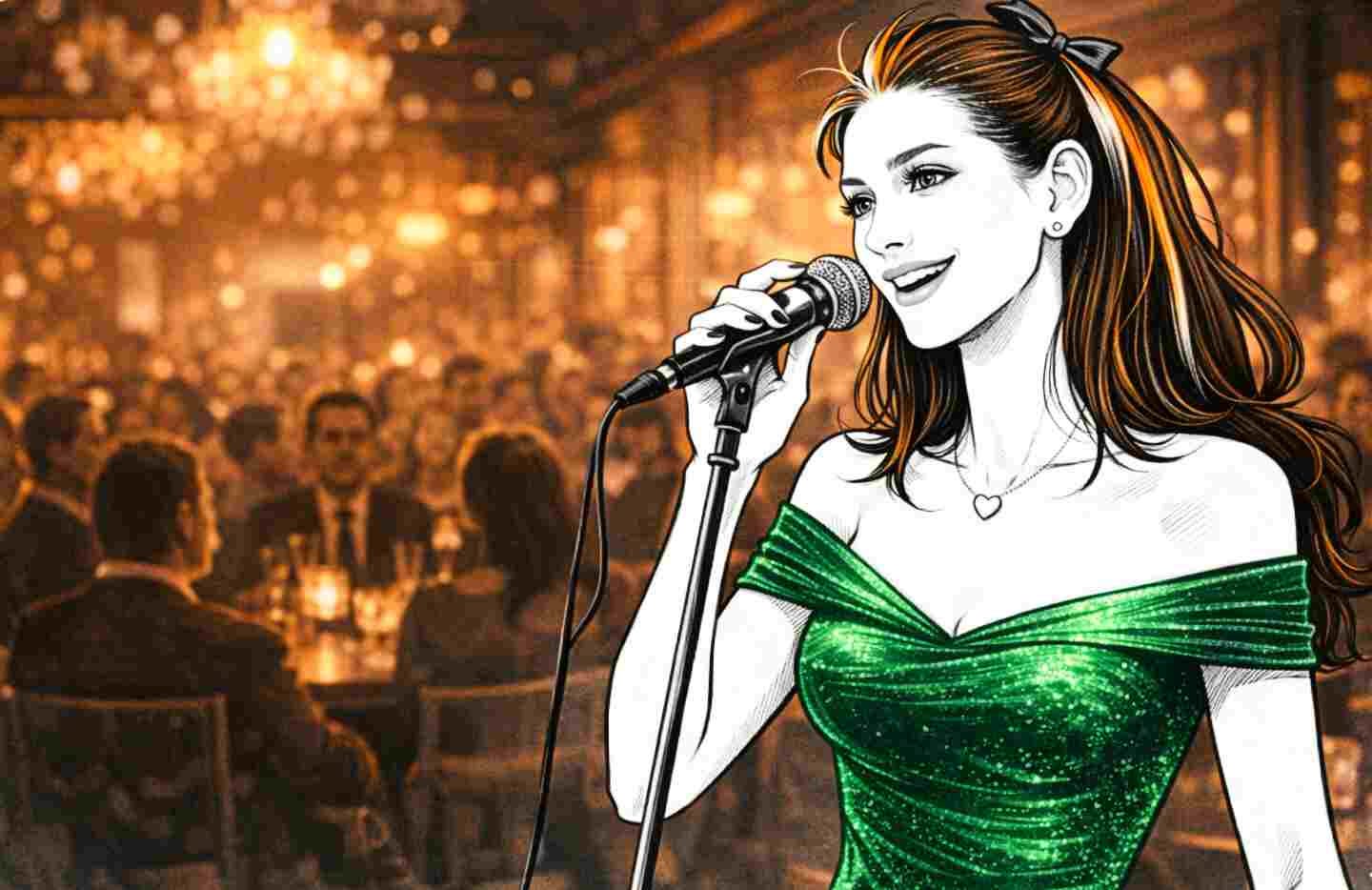
Your voice has been running someone else’s software since approximately age seven, and you’ve been calling it “just how I talk” for three decades. You’ve got your great-grandmother’s swallowed rage living rent-free in your throat, your father’s fear of being too much compressed into your chest, and your mother’s please-don’t-leave-me pitch showing up every single time you ask for a raise. Your LinkedIn presence is curated. Your vocal presence? A trauma museum with free admission and no exit signs.
Your voice is your original frequency made audible. The tone your nervous system chose before language. The vibration your cells recognized as YOU before anyone taught you to be smaller, quieter, more palatable.
Here’s the thing nobody explains in voice coaching, therapy, or that podcast about “showing up authentically”: your voice is the first tone of your entire Field expression. Before your clothes signal anything. Before your body language speaks. Before your Instagram aesthetic establishes brand identity. Your voice enters the room and announces what frequency you’re actually broadcasting.
And the Field? The Field responds to what you’re actually transmitting. Not what you think you’re transmitting. Not what you wish you were transmitting. What your throat, your diaphragm, your entire nervous system is vibrating into existence.
Which is why you can have the perfect resume, the right outfit, the exact affirmations memorized, and still watch opportunities slide past you like you’re invisible. Your mouth says “I deserve this.” Your voice says “please don’t reject me, I’ll be smaller if you need me to be.” The Field hears both. Guess which one it answers?
The Orchestra Problem (Or: Why You Don’t Have Your Seat)
Think of the collective Field as an orchestra. Every human is an instrument. Not metaphorically. Literally. Your voice carries a frequency signature as unique as your fingerprint, as specific as your heartbeat, as irreplaceable as the exact way your blood moves through your particular veins.
When you’re playing your actual instrument at your actual frequency, you have a seat. You have a section. The conductor knows where to find you. Other instruments tune to complement you. You get paid in the currency that matches your contribution: right relationships, right work, right money, right partner.
But here’s where it gets uncomfortable. Most people aren’t playing their instrument. They’re playing the instrument their family handed them at birth. The one that kept the household peace. The one that didn’t threaten Mom’s anxiety or Dad’s authority or Grandma’s grief about the old country. They’re sitting in the violin section making trombone sounds and wondering why the orchestra keeps looking at them like “what the fuck are you doing here?”
Your voice when aligned is how the Field locates you. Your voice when distorted is how the Field loses you. And a Field that can’t find you can’t deliver what’s yours. Plot twist: the right partner, the right tribe, the right abundance? They’re not playing hard to get. They literally can’t hear you because you’re broadcasting on a frequency that doesn’t match your actual signature. You’ve been calling it “bad luck” but your throat has been filing honest reports this whole time.
How You Lost Your Voice (The Neurological Crime Scene)
Nobody decided to speak in a fake register. That’s the first thing to understand. This wasn’t conscious. This wasn’t chosen. This was survival, and survival is neurological, not philosophical. The nervous system learns what keeps the organism alive. And in childhood, “alive” means “not abandoned by the people I depend on completely for food, shelter, and nervous system regulation.”
So when the organism detected: this sound makes them leave the room. This pitch makes them angry. This volume gets me sent away. This tone makes them love me. This register gets attention. This silence keeps me safe... The organism adapted. Instantly. Permanently. Without asking permission.
Your authentic voice didn’t disappear. It got archived. Filed under “too dangerous to access, see also: survival.” Here’s the neurological breakdown of how the crime occurred:
Trauma and the Vagus:
The vagus nerve (longest nerve in your body, connects brainstem to gut, passes directly through your throat) responds to threat by constricting. When you swallow truth, your vagus registers it. When you suppress a scream, your vagus notes it. When you make yourself smaller to be lovable, your vagus remembers.
Your vagus has been keeping receipts since 1987. It has a filing system. It knows exactly which Thanksgiving you swallowed that comment about your weight and it has been holding that in your throat ever since, charging interest at rates that would make a payday loan company blush.
Every “no” you bit back is still living in your throat tissue. Every truth you dimmed to stay loved is archived in your fascial memory. Your voice isn’t just about vocal cords. Your voice is a neurological autobiography playing on repeat.
Mirror Neurons (The Copy Machine Problem):
Your brain has neurons that fire both when you perform an action AND when you watch someone else perform it. You didn’t just hear your parents speak. Your nervous system experienced speaking like them. Practiced it. Got good at it.
If your mother spoke from anxiety, your mirror neurons rehearsed anxiety. If your father spoke from shutdown, your nervous system learned shutdown as a vocal mode. You didn’t choose to copy their frequency. Your mirror neurons did it for free, installed it as default settings, and then hid the uninstall button somewhere in your childhood you can’t access without a therapist and three years of somatic work. (Your nervous system basically pirated your parents’ vocal software and now you can’t figure out how to delete it without corrupting the whole operating system.)
Here’s the brutal math: if you were a violin being raised by trombones, you learned to make trombone sounds. And somewhere in your chest, the violin string that’s actually YOU started to atrophy from underuse.
Dissociation from the Body:
Trauma pulls consciousness UP. Away from the body. Into the head. Into the performance. Into the “how do I need to be right now to survive this?” And voice that comes from the head? Thinner. Higher. Disconnected. Running on effort instead of resonance.
The voice you’re using isn’t wrong. It’s just not yours. It’s a brilliant adaptation made by a very young nervous system that deserves credit for keeping you alive. But the contract you signed at seven? It’s time to renegotiate. (Your seven-year-old didn’t read the fine print. In their defense, there was no fine print. There was just: survive this house.)
The Three Voice Distortions (Pick Your Prison)
Based on which survival strategy your nervous system chose, your voice went one of three directions. Sometimes all three, depending on context. Your boss gets one voice. Your mother gets another. Your partner gets the third. It’s an involuntary rotation of characters you didn’t consciously create.
Prison 1: The Shrinker (Fear of Taking Space)
Neurological profile: Sympathetic activation, blocked diaphragm, breath stuck high, voice migrated from belly to throat.
How it sounds: Fast. Higher than your natural pitch. Rising at the end of sentences like everything is a question. Apologetic before you’ve done anything wrong. The “is this okay? am I okay? do you still like me?” frequency.
Field signal: “I don’t want to be too much.”
Life consequences: People don’t register you as authority. Money is unstable because you can’t hold space for it. Relationships feature other people deciding things. Opportunities exist but somehow you’re never the one selected. You watched seven promotions go to people who were louder and worse at the job. Your rent is late. Your boundaries are suggestions. Your needs are footnotes. And your therapist just asked “have you considered that you might be allowed to want things?” and you cried for forty minutes because genuinely, no, that had not occurred to you.
The Shrinker isn’t quiet by nature. The Shrinker learned that volume equals danger and has been auto-adjusting ever since.
Prison 2: The Freezer (Fear of Rejection)
Neurological profile: Dorsal vagal shutdown, energy collapse, voice loses volume like someone slowly turning down a dial.
How it sounds: Quiet. Sentences that trail off unfinished. Words that come out apologizing for existing. The tone that says “don’t look at me” while technically speaking out loud.
Field signal: “Don’t see me.”
Life consequences: Ideas stay in your head. Opportunities pass because you couldn’t make yourself visible enough to catch them. People project onto you constantly because your low-volume signal leaves space for their fantasies. Partnerships where you’re the background character in your own story.
The Freezer isn’t naturally soft-spoken. The Freezer learned that visibility leads to attack and went into energetic witness protection.
Prison 3: The Prover (Fear of Worthlessness)
Neurological profile: Hyperactivation, constant fight mode, voice pushed loud and hard because stillness feels like death.
How it sounds: LOUD. Tense. Too many words, not enough presence. Speaking for 20 minutes, saying nothing. The verbal equivalent of running on a treadmill to prove you’re not lazy.
Field signal: “Please validate me or I will talk louder.”
Life consequences: Burnout. People listen but don’t feel. You’re exhausting to be around and you know it but you can’t stop. Money comes through effort, never through ease. Success that feels hollow because it required performing yourself into existence. You’ve got 47,000 followers and no one who actually knows you. Your podcast has sponsors but your nervous system is filing for bankruptcy. You delivered a TED Talk about authenticity while dissociating from your body for 18 minutes straight.
The Prover isn’t naturally loud. The Prover learned that silence means worthlessness and has been generating noise ever since.
Here’s what nobody tells you:
All three prisons have the same guard: a nervous system that learned your authentic voice isn’t safe.
The Shrinker’s voice got too big once and was punished. The Freezer’s voice got seen once and was attacked. The Prover’s silence was interpreted as absence once and led to abandonment. The prison isn’t your personality. The prison is a memory your nervous system is still responding to.
Why Your Recorded Voice Sounds Like a Stranger (The Science Part)
This is the moment everyone experiences and nobody talks about: hearing your own voice on a recording and wanting to leave your body permanently.
“That’s not me. That sounds awful. Is that really how I sound?”
Yes. That’s really how you sound. And no, the technology isn’t broken. Your voice memo didn’t betray you. The Zoom recording is accurate. That podcast episode where you thought you sounded intelligent? Everyone else heard that voice. The one that just made you want to change your name and move to a country where you never have to speak again.
Here’s the physics:
When you speak, you hear your voice through TWO channels simultaneously:
Air conduction: Sound waves exit your mouth, travel through the air, and enter your ears. This is what everyone else hears.
Bone conduction: Vibrations travel through your skull directly to your inner ear. This adds lower frequencies, more depth, more resonance. This is your private, enhanced version of yourself.
Recordings capture air conduction only. The bone vibration doesn’t travel into the microphone. So your recorded voice sounds higher, thinner, less warm than what you experience from the inside.
Your recorded voice IS your real voice. The one others have been hearing all along. The internal version is the enhanced edit. And most people have never reconciled the gap.
But here’s where it gets psychologically interesting:
Your brain treats hearing your recorded voice as a “self-recognition failure.” Research shows that when people hear recordings of themselves, the anterior cingulate cortex (emotional regulation) and prefrontal cortex (self-evaluation) activate intensely. It’s the same pattern as seeing an unflattering photograph. The brain goes: “This doesn’t match my internal model. ERROR. CRINGE. ABORT.”
You’ve been living with a stranger’s voice your whole life. The voice everyone else knows you by. And every time you hear it, your nervous system experiences a small identity crisis.
Now. Add to this the fact that your recorded voice isn’t just capturing air conduction. It’s capturing the frequency distortion. The adaptation. The survival register. That cringe you feel? Maybe it’s not just about bone conduction physics. Maybe it’s your soul hearing that your mouth has been speaking in someone else’s key this whole time.
What Happens in the Field When You Speak (The Energetic Truth)
Your voice enters a room and the Field responds before anyone consciously processes your words.
This is physics, not woo. Sound is vibration. Vibration affects nervous systems. Your nervous system, their nervous systems, the shared nervous system of any group. Before the content lands, the frequency lands.
When you speak from your authentic frequency:
Your tone regulates other nervous systems. Polyvagal theory calls this the “ventral vagal social engagement system.” When your voice is grounded, embodied, resonant, it literally calms the people hearing it. Their vagus responds to your vagus. Oxytocin releases. Safety signals transmit. The Field reads you as trustworthy.
The Field can locate you. Your signal is clear. Opportunities that match your frequency can find you because you’re actually broadcasting where you are, not where you think you should be.
Relationships harmonize. Your voice tone carries more information than your words. Partners, friends, tribe members all tune to your frequency unconsciously. When your frequency is authentic, the right people recognize it. When it’s distorted, you attract people who resonate with the distortion.
When you speak from a survival register:
Other nervous systems detect incongruence. Your mouth says one thing. Your tone says another. This registers subconsciously as untrustworthy, even if no one can articulate why.
The Field experiences turbulence. Your signal is inconsistent. Like a radio station fading in and out. People who might be yours can’t lock onto your frequency because it keeps changing based on context, fear, or audience.
You attract relationships that match your distortion, not your essence. Which is why you keep ending up with the same dynamic wearing different faces. The faces aren’t the problem. Your broadcast is.
Your voice is a Field locator. The right job, partner, tribe, opportunity? They’re all scanning for a signal. Your signal. The one that matches theirs. But if you’re broadcasting on your mother’s frequency or your third-grade teacher’s frequency or your ex’s frequency? They can’t find you.
And you can’t understand why everything feels so hard. Why you’re doing everything “right” but the Field keeps misdelivering. Spoiler: the Field is delivering exactly what matches your broadcast. You just don’t recognize that your broadcast doesn’t match your desire.
You ordered abundance. Your throat sent the Field a completely different request. Now you’re standing at the cosmic pickup counter holding a receipt for “safety through smallness” and wondering why your manifestation looks nothing like your vision board. The Field didn’t mess up the order. Your voice did.
The Return Protocol (How to Get Your Voice Back)
You don’t reclaim your authentic voice by “speaking better.” You reclaim it by changing what your nervous system believes about the safety of being heard.
Three parallel processes. All necessary. None optional:
Process 1: Regulate the Nervous System
While your body stays in defense, your voice will remain an adaptation. You can’t think your way into authentic voice. You can’t affirm your way there. You can’t Instagram-motivation your way there.
The vagus nerve passes through your throat. When the vagus is in threat mode, the throat constricts. When the throat constricts, the voice distorts. This is physiology, not psychology.
The work:
Rhythmic diaphragmatic breathing (3-5 minutes) to drop the sympathetic activation. Jaw release (your jaw holds everyone else’s opinions about your voice). Tongue relaxation (the tongue tenses when words feel dangerous). Neck softening (the neck stiffens to protect the throat from being visible). Your voice doesn’t live in your head. Your voice lives in your body. And a body in survival cannot produce a voice of truth.
Process 2: Separate Your Voice from Inherited Voices
This is identity work, not phonation work.
The questions:
When I speak to authority, whose voice am I using?
When I ask for money, what register do I shift into?
When I fall in love, do I become higher? Softer? Smaller? Faster?
When I’m angry, am I finally speaking in my own voice, or just my mother’s voice reversed?
Your “natural voice” might not be natural at all. It might be perfectly practiced mimicry installed so early you can’t remember choosing it.
The mapping exercise:
Record yourself in four different states. Not one “professional” recording. Four emotional registers.
Voice when alone and unobserved. Voice when explaining something you love. Voice when setting a boundary. Voice when wanting to be accepted.
The differences between these four recordings reveal the fracture map. Where you abandon yourself. Where you perform. Where you might actually be real.
Process 3: Titrated Reconditioning
The voice doesn’t return through performance. It doesn’t return through deciding to “be authentic now.” It returns through small doses of truth that the nervous system can tolerate.
One small truth spoken without apology. One moment of holding your tone instead of letting it lift into a question. One pause without filling it with nervous sound.
Titration. Not flood. Your nervous system learned to distort over thousands of moments. It will relearn authenticity through thousands of small corrections.
The Six Protocols (What to Actually Do)
Protocol 1: Return to the Base Tone
Three minutes of diaphragmatic breathing. Feel your belly expand, not your chest.
Relax your jaw. Let it hang slightly open, stupid-looking, unclenched.
With mouth closed, produce a long “hmmmmm” on the exhale. No forcing. No performance. Just vibration.
Goal: Feel the resonance in your chest, your face, your skull. Not just in your throat.
After the hum settles, say your own name. Three times. Slowly.
Listen. Does your name come out apologizing for existing? Does it come out proving something? Does it come out asking permission?
You’re not in your tone yet if your name sounds like an excuse.
Protocol 2: Throat Unblock
Yawn gently. No sound. Just the opening. Then release a soft “haaaah” on the exhale. Voiced. Gentle. Then: single sentences, spoken only on the exhale. Not pushed. Supported by breath.
“This is mine.” “I’m not rushing.” “I won’t make myself smaller.” “I need more space.” If the sentence rides on a held inhale, you’re still in defense. True voice rides exhale. Always.
Protocol 3: Separating from Mirrored Voices
Write down three people whose voices shaped your early life. Then: imitate each one for twenty seconds. Not a cartoon. A precise, felt reproduction. Their rhythm. Their pressure. Their melody. Their emotional signature. After each imitation, stop. Exhale. Say out loud: “That was learned.”
Then produce your neutral hum. Then thirty seconds of spontaneous speech about something simple. This practice often brutally reveals how much of “your” voice belongs to someone else.
Protocol 4: Recording as Mirror (Not Judge)
Record your voice daily for fourteen days. Sixty seconds. Same text each time. Then thirty seconds of spontaneous speech. Don’t evaluate whether you “like” it.
Listen only for four parameters: Speed (are you rushing?) Warmth (is there life in the tone?) Depth (where is the voice living in your body?) Presence (are you actually there while speaking?)
Research shows: the brain adjusts to hearing the recorded voice after repeated exposure. The cringe diminishes. The identity gap closes. You start to recognize yourself.
Protocol 5: The Relational Truth Test
Take one trusted person. Speak three small truths to them that you normally soften. Not accusations. Not drama. Just unsoftened facts.
“I need this to be slower.” “That doesn’t feel good to me.” “This matters to me.”
Record your voice before. Record it after. Authentic voice doesn’t return in isolation: it was lost in relationship, it returns in relationship.
Protocol 6: Body Before Sound
Before any important conversation: Sixty seconds of swaying your spine and pelvis. Nothing structured. Just movement. Three hums from the base of your belly. Then speak.
A stiff spine produces a disconnected voice. The voice lives in the body. Move the body, move the voice.
Protocol 7: When You’re Already In It (The Real-Time Reset)
Everything above works beautifully when you’re alone, regulated, practicing in your bedroom with a candle lit and nowhere to be. Then your boss looks at you in that meeting and suddenly you’re fourteen years old, your voice shoots up three octaves, and somewhere in your throat your mother starts explaining why this isn’t your fault while simultaneously apologizing for your existence.
Loading trauma.exe. Voice update: insecure 2007 edition. This is neurological time travel. Your amygdala hijacks the system, your prefrontal cortex goes offline, and your body chooses the fastest known pattern. You didn’t “fail at authenticity.” Your nervous system just collapsed from infinite possibilities into one very old, very practiced frequency. The hack isn’t “speak better.” The hack is: change the body state FIRST. Then voice follows.
Three steps. Memorize them like prayer.
PAUSE. When you feel the trigger, do NOT respond immediately. Two seconds of silence. That’s it. Two seconds breaks the automatic loop. Your nervous system expects instant reaction. Silence is a pattern interrupt. (People will think you’re thoughtful. Let them.)
DROP. Tongue on the roof of your mouth. Inhale through nose. Attention into lower belly. Exhale slowly. But here’s the key: feel the weight of your body drop two centimeters. Not metaphorically. Actually feel yourself getting heavier, lower, more here. This is Tao practice meeting vagal regulation. It works in three seconds.
SPEAK. One sentence. Twenty percent slower than you want to. If you feel the urge to explain, override it. One sentence. Stop.
Your anchor phrase when you need time: “I need a moment to think about that.” Said slowly. Said from belly. Said without apology in the tone.
The training: You can’t practice this only when it’s safe. That’s like training for a marathon by sitting on your couch visualizing running. Pick a situation that triggers you. Boss, partner, money conversation, mother. Visualize it. Let the discomfort activate ON PURPOSE. Then: inhale, exhale with soft “fffff” sound (vagus reset), hand on belly, say your one sentence SLOW.
Repeat five times. You’re training your system to not go autopilot.
The breath hack for instant regulation: Inhale four seconds. Exhale six seconds. Focus on belly expanding. Add a soft “mmm” sound on the exhale. This physically drops your voice from throat to body. Not visualization. Physiology.
The anti-overexplain code: If you feel yourself about to justify, clarify, soften, or add seventeen caveats to what you just said: STOP. After one sentence. Let the silence exist. Your discomfort with that silence is the exact thing you’re healing.
Here’s what nobody tells you: Authentic voice doesn’t get trained in safety. It gets trained while you’re uncomfortable and you stay in your body anyway. If you’re waiting to feel safe before you speak your truth, you’ll be waiting until approximately your next incarnation. Your nervous system doesn’t give permission. It follows proof. Give it three seconds of pause, one sentence from belly, and silence instead of apology. That’s the proof.
Do it enough times and your voice stops asking for permission. It just... exists. And that, honestly, is what irritates people who are still running trauma.exe on loop.
What Authentic Voice Actually Is (The Clarification)
Authentic voice doesn’t mean low voice. Authentic voice doesn’t mean slow voice. Authentic voice doesn’t mean loud voice. Some people genuinely have higher, faster, lighter instruments. The problem isn’t pitch. The problem is mismatch.
A violin doesn’t need to become a trombone. It needs to return to its own true vibration. People confuse authentic with unfiltered. Your coworker who “tells it like it is” and leaves emotional wreckage at every meeting? Unregulated nervous system with a microphone. Authentic voice can hold truth WITHOUT spraying shrapnel. No internal lying. Present. Embodied. True.
The working definition:
Authentic voice is where nervous system, breath, identity, and truth meet. It gets lost when expression becomes survival strategy. It returns when the body recovers safety, when we separate ours from inherited, and when we begin to tolerate our own tone in relationship.
Then some people will like you less. And here’s the secret: Those were the people who only liked the version of you on mute anyway. (They’ll be fine. They’ll find someone else to project onto. Probably already have three candidates lined up. Your departure from the role of “person who makes them feel comfortable by being uncomfortable” will be mourned for approximately forty-five minutes before they find a replacement.)
The Final Frequency
You were born with a tone. Before you had words. Before you had strategy. Before anyone taught you to shrink or perform or disappear. That tone is still in you. Archived. Not destroyed. Waiting under the adaptations like a spring waiting under winter. Your bones remember. Your blood knows. Your cells still vibrate at the frequency that is uniquely, unreplaceably, irreducibly YOU.
The Field hasn’t forgotten. Your orchestra seat is still there. Your tribe is still scanning. Your abundance is still looking for your signal. The only question is: Will you let your throat remember what your nervous system made it forget?
Ancient traditions say Om created the universe. They were being precise, just dressed in mythology. Humming regulates the vagus. Regulated vagus produces authentic frequency. Authentic frequency broadcasts your true signal into the Field. The Field responds by creating reality that matches the signal. You're vibrating your nervous system into coherence so the Field can finally hear what you've been trying to say this whole time. Physics wearing robes. 🔥
The voice you speak with creates the Field you live in. Choose the original frequency. The rest is just physics. ✨💎
TRUE VOICE READING
You read this and something in your throat tightened. Because you know. You’ve been speaking and somehow not being heard. Your voice changes in THAT relationship. Your life keeps responding to a frequency you didn’t know you were broadcasting.
Which traumas is your voice hiding, ones you don’t even know you’re carrying? Which neural grooves have been shaping your sound since childhood? Which fractals keep collapsing you into the old frequency the moment you open your mouth? And do you have any idea what you’re actually triggering in others when you speak?
This reading cracks open what the article can’t: YOUR specific architecture.
What you receive:
Magic square tarot (9 cards, 9 vectors) decoded for your voice specifically: where it went underground, what silenced it, what’s ready to return.
Natal check on YOUR voice architecture: which planets, houses, and aspects have been running your throat like a script you never auditioned for.
Your fractals mapped: the inherited patterns, the ancestral silence, the neural grooves that collapse you into the old frequency.
Your original Field frequency through voice: what your voice sounds like when it’s actually yours, and what becomes possible when you broadcast from source instead of survival.
Alignment protocols: specific exercises for YOUR doorway back: voice, breath, body. How to use your reclaimed frequency in love, work, visibility. Not generic advice. Precision tools for your specific architecture. A written document that’s yours forever. This is a focused lens on YOUR voice. Not a full Blueprint, a precision strike on the frequency you forgot to speak. 181€
Write to: dea@sageandsass.club Subject: “True Voice” Include: birth date, exact time, place + what’s happening with your voice right now.
Excellent wisdom. These are exercises I will definitely bring within me as I go through my days. I never really thought about how, throughout my life, the voices of the past affected me in situations, but I can identify them now. Especially my father’s -orders to get into the bedroom for a beating; my mother’s for not bringing shame to the family; and a supervisor’s - agreeing all the time with what I would say and then betraying me.
Amazing how much influence they insidiously made. It’s like a poison that eats away at self. Time to reclaim self, whom I love and truly want to nurture so that I may genuinely voice my love for those around me. Thank you, Dea. 🙏🏼♾️❤️
Thank You Thank You Thank You. I have known this forever but was mired in quicksand and could not move. This hit me right between the eyes and I will start immediately on my journey back.